
Dubai’s hot climate makes outdoor shade more than a luxury—it is an essential part of creating comfortable, usable, and protected outdoor spaces. From residential gardens and villa patios to schools, playgrounds, parking areas, restaurants, resorts, and commercial developments, professionally shade structure Installation can significantly improve outdoor comfort while protecting people and property from intense sunlight.
When choosing a shade structure in Dubai, material quality plays a major role in durability, appearance, maintenance, and long-term performance. Two of the most popular material options are HDPE (High-Density Polyethylene) and PVC (Polyvinyl Chloride). Both can provide effective protection from sunlight, but they have different characteristics and are better suited to different applications.
This guide explains the benefits of Dubai shade structure installation, compares premium HDPE and PVC materials, and highlights the factors you should consider before installing a shade system.
What Is a Shade Structure?
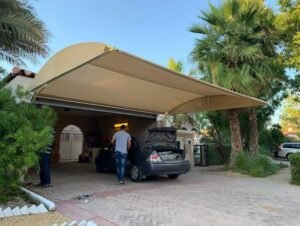
A shade structure is a purpose-built outdoor covering designed to reduce direct sunlight and create a more comfortable environment underneath. Depending on the application, it can consist of tensioned fabric, a steel or aluminum frame, membrane panels, or a combination of structural and fabric components.
Modern shade structures can be designed in a wide range of shapes and sizes. Common applications include:
- Villa gardens and terraces
- Swimming pool areas
- Children’s playgrounds
- School courtyards
- Sports facilities
- Outdoor restaurants
- Hotel and resort areas
- Parking spaces
- Walkways and entrances
- Public parks
- Commercial outdoor areas
In Dubai, the structure needs to be designed with the local climate in mind. High temperatures, intense UV exposure, dust, and occasional strong winds can place significant demands on outdoor materials.
Why Install a Shade Structure in Dubai?
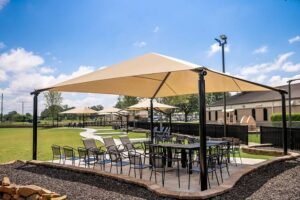
Protection from Intense Sunlight
Dubai experiences long periods of strong sunshine, particularly during the hotter months. A well-designed shade structure can reduce direct solar exposure and create a more comfortable environment for people using an outdoor area.
For playgrounds, schools, restaurants, and recreational spaces, effective shade can make outdoor areas considerably more usable.
Improved Outdoor Comfort
A shaded space can be much more comfortable than an exposed area. By reducing direct solar radiation, shade structures can help create more pleasant seating, play, waiting, and recreational areas.
This is particularly valuable for hospitality businesses and residential properties that want to make better use of their outdoor space.
Protection for Outdoor Equipment
Shade structures can also protect outdoor furniture, playground equipment, vehicles, poolside areas, and other installations from continuous exposure to sunlight.
UV-resistant materials can help reduce premature deterioration caused by prolonged outdoor exposure.
Attractive Architectural Design
A shade structure does not have to look purely functional. Modern tensile and membrane designs can become an attractive architectural feature.
Curved, cantilevered, sail, dome, and custom-shaped structures can complement contemporary villas, commercial buildings, schools, and public spaces.
Premium HDPE Shade Structures
HDPE stands for High-Density Polyethylene, a durable polymer widely used for outdoor shade fabrics.
Premium HDPE shade cloth is typically manufactured with knitted construction and can be designed to provide substantial UV protection while allowing air to pass through the fabric.
This makes HDPE particularly useful for playgrounds, parks, gardens, outdoor seating areas, and recreational facilities.
Advantages of HDPE
Excellent Airflow
One of the major advantages of HDPE shade fabric is its breathable construction. Air can pass through the material, which can help prevent the covered space from feeling completely enclosed.
This characteristic makes HDPE an attractive option for open outdoor environments in Dubai.
UV Protection
Quality HDPE fabrics are designed to block a significant portion of harmful UV radiation. This makes them suitable for areas where people spend extended periods outdoors.
For playgrounds, swimming pools, gardens, and outdoor seating, UV protection is an important consideration.
Lightweight Construction
HDPE fabric is relatively lightweight compared with some solid membrane materials. This can help simplify structural design while still providing effective shade.
Suitable for Large Areas
HDPE shade sails and tension structures can be designed to cover playgrounds, parking areas, sports facilities, and other large outdoor spaces.
Multiple shade sails can also be combined to create larger custom-covered areas.
Premium PVC Shade Structures
PVC-coated fabric is another popular option for architectural shade structures.
PVC membrane fabrics generally consist of a polyester base fabric coated with PVC. Depending on the product specification, they can offer a combination of strength, weather resistance, UV protection, and waterproofing.
PVC is particularly attractive when the project requires a more enclosed or weather-resistant covering.
Advantages of PVC
Water Resistance
One of the key advantages of PVC membrane fabric is its ability to provide a more water-resistant covering than breathable HDPE mesh.
This makes PVC a suitable choice for areas where protection from occasional rain is important.
Durable Architectural Fabric
High-quality PVC-coated fabrics are engineered for demanding outdoor applications. When properly specified and installed, they can provide long-term performance in commercial and architectural projects.
Flexible Design Options
PVC membranes can be fabricated into distinctive shapes and structures, making them suitable for architectural projects where appearance is an important consideration.
Easier Cleaning
Depending on the exact coating and finish, PVC fabrics can be relatively easy to clean and maintain. This can be useful for commercial properties where appearance needs to remain consistent.
HDPE vs PVC: Which Material Is Better?
There is no single material that is best for every Dubai shade structure project.
The right choice depends on the intended application.
| Feature | HDPE | PVC |
| UV protection | Excellent with quality fabric | Excellent with suitable specification |
| Airflow | Excellent | Lower than mesh HDPE |
| Water resistance | Limited/permeable | Excellent with suitable membrane |
| Weight | Relatively lightweight | Generally heavier |
| Design flexibility | Excellent | Excellent |
| Best for | Playgrounds, parks, gardens | Commercial and architectural structures |
| Maintenance | Generally low | Generally low with proper care |
| Large-area applications | Excellent | Excellent |
| Weather protection | Primarily shade | Shade plus stronger rain protection |
For an open playground or garden where ventilation is important, premium HDPE may be the preferred option.
For a restaurant terrace, entrance, poolside facility, or commercial project where greater weather protection is required, PVC may be more appropriate.
Factors to Consider Before Shade Structure Installation
Choosing the fabric is only one part of the process. Proper shade structure installation in Dubai requires careful planning.
1. Location
Start by assessing where the structure will be installed. The position of the sun throughout the day should be considered to determine the most effective shade coverage.
For a playground, for example, the shade should cover areas where children spend the most time.
2. Structure Size
Determine the required width, length, height, and coverage area. A professional installer can help establish the appropriate dimensions based on the available space.
3. Structural Design
The supporting posts, beams, brackets, foundations, and connection points must be suitable for the structure and its environmental loads.
This is particularly important for large shade systems.
4. Fabric Quality
Not all HDPE or PVC fabrics are identical. Compare the manufacturer’s specifications, UV resistance, tensile strength, coating, warranty, and expected service life.
Premium materials may cost more initially but can provide better long-term performance.
5. Drainage
For PVC structures designed to provide rain protection, proper drainage should be incorporated into the design.
Water should not be allowed to accumulate on the membrane because standing water can place unnecessary loads on the structure.
6. Wind Resistance
Wind conditions should always be considered during the design and installation process.
The structure needs appropriate engineering, anchoring, connections, and fabric tension. Large shade structures should be designed according to applicable local requirements and project-specific engineering calculations.
Why Professional Installation Matters
A high-quality fabric cannot compensate for poor installation.
Professional Dubai shade structure installation involves more than attaching fabric to a few posts. The installer needs to consider structural stability, foundation requirements, fabric tension, drainage, connection details, alignment, and the specific environmental conditions of the site.
Correct tension is especially important for tensile shade structures. Insufficient or uneven tension can affect the appearance and performance of the fabric.
Professional installation can also help ensure that the finished structure is safe, functional, and visually appropriate for its surroundings.
Shade Structures for Residential Properties
Homeowners in Dubai increasingly use outdoor areas as extensions of their living spaces.
A professionally designed shade structure can transform:
- Garden seating areas
- Villa terraces
- Pool decks
- Outdoor kitchens
- BBQ areas
- Children’s play spaces
- Balconies
- Rooftop areas
HDPE is often a practical choice when homeowners want breathable shade and an open-air feeling.
PVC can be more suitable when the goal is to create stronger protection against sun and rain.
The final choice should be based on the home’s architecture, outdoor layout, expected usage, and preferred appearance.
Commercial Shade Structure Applications
Businesses can also benefit significantly from professionally installed shade structures.
Restaurants and cafés can create more comfortable outdoor dining areas. Hotels can shade poolside seating. Schools can protect playgrounds and courtyards, while commercial properties can provide shaded waiting and pedestrian areas.
For commercial applications, durability and appearance are especially important because the structure becomes part of the customer’s overall experience.
A well-designed shade structure can improve the functionality of an outdoor area while contributing to the property’s visual identity.
Maintenance of HDPE and PVC Shade Structures
Regular maintenance can help extend the service life of an outdoor shade structure.
Remove accumulated dust and debris from the fabric according to the manufacturer’s cleaning recommendations. Inspect connection points, structural components, stitching, and tensioning systems periodically.
After severe weather, the structure should also be inspected for signs of damage.
Avoid using aggressive cleaning chemicals unless they are specifically approved for the fabric. Incorrect cleaning methods can damage protective coatings or affect the material’s appearance.
Professional inspections can be particularly valuable for large commercial structures.
How Much Does Shade Structure Installation Cost in Dubai?
The cost of a shade structure in Dubai varies considerably depending on the project’s requirements.
Important pricing factors include:
- Total coverage area
- HDPE or PVC material
- Fabric quality and specifications
- Structural steel or aluminum requirements
- Design complexity
- Number of support columns
- Foundation requirements
- Installation conditions
- Custom fabrication
- Drainage requirements
- Project location
- Accessories and finishing details
For this reason, a professional site inspection and customized quotation are generally more useful than relying on a fixed price per square metre.
The cheapest option may not always be the most economical over the long term. A higher-quality fabric and properly engineered structure can offer better durability and lower maintenance requirements.
Choosing the Right Shade Structure Company in Dubai
When comparing shade structure suppliers and installers, look beyond the price.
Ask about the quality and origin of the HDPE or PVC fabric, structural materials, installation experience, warranties, project portfolio, and maintenance support.
A reliable installer should also be able to explain why a particular material and structural design is appropriate for your site.
For larger projects, request detailed specifications and ensure the proposed structure is properly engineered for the intended application.
Final Thoughts
A professionally installed shade structure in Dubai can make outdoor spaces cooler, more comfortable, attractive, and functional.
Premium HDPE shade structures are an excellent choice for breathable outdoor shade, particularly in playgrounds, parks, gardens, and recreational spaces. PVC shade structures, meanwhile, can provide a stronger barrier against sunlight and rain and are often well suited to architectural, commercial, and hospitality applications.
The best solution depends on your project’s location, size, desired level of weather protection, design preferences, and budget.
Rather than choosing a material based solely on price, consider long-term performance, fabric quality, structural engineering, installation standards, and maintenance requirements. With the right material and professional installation, a shade structure can provide valuable outdoor protection for years while enhancing the appearance and usability of your Dubai property.
Frequently Asked Questions
1. What is the best material for a shade structure in Dubai?
Premium HDPE and PVC are both strong choices, but the best material depends on the application. HDPE is particularly suitable for breathable outdoor shade, while PVC is a good option when greater water resistance and architectural coverage are required.
2. Is HDPE suitable for Dubai’s hot weather?
Yes. Quality HDPE shade fabric is designed for outdoor use and can provide excellent UV protection while allowing airflow through the mesh. This makes it particularly useful for playgrounds, gardens, parks, and recreational areas.
3. Is PVC better than HDPE for rain protection?
Generally, PVC-coated membrane fabric provides better water resistance than breathable HDPE mesh. If rain protection is an important requirement, PVC may be the more suitable option, provided the structure is designed with appropriate drainage.
4. How long does a shade structure last in Dubai?
The service life depends on fabric quality, structural materials, installation quality, UV exposure, wind conditions, maintenance, and how the structure is used. Premium materials and professional installation can contribute significantly to long-term performance.
5. How do I choose a shade structure installer in Dubai?
Look for an experienced installer with a portfolio of completed projects, quality HDPE or PVC materials, proper structural engineering, professional installation practices, clear warranty terms, and after-sales maintenance support. Always compare specifications and total project value rather than choosing solely on the lowest quotation.