
Warehouses in Dubai operate in demanding environments where flooring must withstand heavy machinery, constant forklift traffic, chemical exposure, and fluctuating temperatures. Traditional concrete epoxy flooring for Dubai often struggle to meet these requirements over the long term, leading many warehouse owners and facility managers to invest in industrial epoxy flooring.
Epoxy flooring has become a preferred choice for warehouses across Dubai due to its durability, chemical resistance, low maintenance requirements, and enhanced safety features. However, selecting the right epoxy flooring system requires a clear understanding of industry standards, performance requirements, and environmental considerations specific to the UAE.
This article explores the key standards and requirements for industrial epoxy flooring in Dubai warehouses, helping businesses make informed decisions for long-lasting and efficient flooring solutions.
Table of Contents
- Introduction
- What Is Industrial Epoxy Flooring for Dubai?
- Why Dubai Warehouses Need Epoxy Flooring
- Key Standards for Warehouse Epoxy Flooring
- Surface Preparation Requirements
- Load-Bearing and Traffic Considerations
- Chemical and Spill Resistance Standards
- Safety and Anti-Slip Requirements
- Temperature and Environmental Factors
- Maintenance and Longevity Requirements
- Choosing the Right Epoxy Flooring System
- Conclusion
- FAQs
What Is Industrial Epoxy Flooring for Dubai?
Industrial epoxy flooring for Dubai is a resin-based coating system applied over concrete surfaces to create a seamless, durable, and highly resistant floor. The flooring consists of epoxy resin and hardener components that chemically react to form a strong protective surface.
Unlike conventional floor coatings, industrial epoxy systems are designed to handle extreme warehouse conditions while providing a smooth and professional appearance.
Common warehouse epoxy flooring types include:
- Self-leveling epoxy flooring
- Heavy-duty epoxy coatings
- Anti-slip epoxy systems
- Chemical-resistant epoxy flooring
- High-build epoxy flooring
Each system serves different operational requirements depending on warehouse activities.
Why Dubai Warehouses Need Epoxy Flooring
Dubai warehouses face unique operational challenges that make flooring performance critical.
Some of these challenges include:
- Continuous forklift and pallet jack movement
- Heavy storage rack loads
- Dust accumulation from concrete floors
- Exposure to oils and chemicals
- High temperatures and humidity levels
- Frequent cleaning and maintenance operations
Industrial epoxy flooring addresses these issues by providing a hard-wearing surface that resists damage and maintains performance over time.
Additionally, many logistics, manufacturing, and distribution facilities require flooring solutions that support health, safety, and operational efficiency standards.
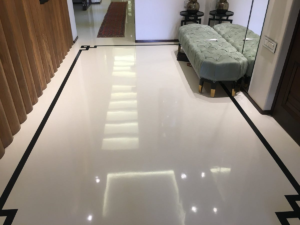
Key Standards for Warehouse Epoxy Flooring for Dubai
Industrial flooring installations should comply with recognized quality and performance standards to ensure reliability and safety.
Important considerations include:
Standard Requirement |
Purpose |
| Abrasion Resistance | Handles heavy traffic and equipment movement |
| Impact Resistance | Prevents cracking from dropped loads |
| Chemical Resistance | Protects against spills and contaminants |
| Slip Resistance | Improves worker safety |
| Compressive Strength | Supports heavy warehouse loads |
| Surface Flatness | Ensures smooth equipment operation |
Meeting these requirements helps warehouse operators reduce maintenance costs and improve operational efficiency.
Surface Preparation Requirements
One of the most important factors affecting epoxy flooring performance is proper surface preparation.
Before installation, the concrete substrate should be:
- Structurally sound
- Free from oil, grease, and contaminants
- Properly cured
- Moisture tested
- Mechanically prepared through grinding or shot blasting
Inadequate preparation can lead to coating failure, peeling, bubbling, or poor adhesion.
Professional contractors typically conduct moisture testing and surface profiling to ensure the floor is suitable for epoxy application.
Load-Bearing and Traffic Considerations
Warehouse floors must support substantial loads every day.
Factors that should be evaluated include:
Forklift Traffic
Frequent forklift movement can cause wear and surface deterioration if flooring systems are not designed for industrial use.
Storage Loads
High-density storage systems create concentrated pressure points that require strong compressive strength.
Impact Resistance
Dropped pallets, equipment, and heavy goods can damage weaker flooring surfaces.
Heavy-duty epoxy systems are specifically engineered to handle these operational demands while maintaining structural integrity.
Chemical and Spill Resistance Standards
Warehouses often store products that may expose flooring coatings surfaces to chemicals, oils, solvents, and cleaning agents.
A quality epoxy flooring system should provide resistance against:
- Industrial chemicals
- Hydraulic fluids
- Fuel spills
- Cleaning solutions
- Lubricants
- Acids and alkalis
Chemical-resistant epoxy coatings help prevent surface deterioration while protecting the underlying concrete structure.
This is especially important for manufacturing, automotive, pharmaceutical, and logistics facilities operating in Dubai.
Safety and Anti-Slip Requirements
Workplace safety is a major concern in warehouse environments.
Slippery floors can increase the risk of accidents involving personnel and equipment.
Industrial epoxy flooring can be customized with anti-slip aggregates that improve traction while maintaining durability.
Key safety benefits include:
- Reduced slip and fall risks
- Improved visibility with floor markings
- Clearly defined walkways
- Enhanced operational safety
- Better compliance with workplace safety regulations
Many warehouse operators incorporate colored safety zones and traffic markings directly into the epoxy flooring system.
Temperature and Environmental Factors
Dubai’s climate presents unique environmental challenges for industrial flooring.
Extreme heat and humidity can affect flooring performance if unsuitable materials are used.
Important considerations include:
Heat Resistance
Warehouse flooring should withstand elevated temperatures without softening or degrading.
Moisture Control
Humidity and moisture vapor transmission can impact adhesion and coating longevity.
UV Exposure
Warehouses with loading bays or partially exposed areas may require UV-resistant topcoats to prevent discoloration.
Selecting flooring systems specifically designed for Middle Eastern conditions helps maximize service life and performance.
Maintenance and Longevity Requirements
One of the major advantages of epoxy flooring is its low maintenance requirements.
To maximize lifespan, warehouse managers should:
- Conduct routine cleaning
- Remove spills promptly
- Inspect high-traffic areas regularly
- Repair minor damage early
- Follow manufacturer maintenance guidelines
With proper installation and maintenance, industrial epoxy flooring can provide many years of reliable service while maintaining its appearance and performance.
The reduced need for repairs and replacements often results in significant long-term cost savings.

Choosing the Right Epoxy Flooring System
Selecting the most suitable epoxy flooring system depends on several operational factors.
Consider:
- Warehouse type
- Traffic volume
- Load requirements
- Chemical exposure levels
- Safety requirements
- Maintenance expectations
- Budget considerations
A professional flooring assessment can help identify the most effective solution based on facility needs and operational demands.
Working with experienced industrial flooring specialists ensures proper product selection and installation quality.
Conclusion Epoxy Flooring for Dubai
Industrial epoxy flooring has become an essential solution for warehouses throughout Dubai due to its durability, safety benefits, and long-term cost effectiveness. However, achieving optimal performance requires more than simply applying a coating. Warehouse operators must consider standards related to surface preparation, load-bearing capacity, chemical resistance, safety, and environmental conditions.
By selecting a high-quality epoxy flooring system that meets operational requirements and industry standards, businesses can improve workplace safety, reduce maintenance expenses, protect concrete substrates, and enhance overall warehouse efficiency. As Dubai’s logistics and industrial sectors continue to expand, epoxy flooring remains one of the most reliable investments for modern warehouse facilities.
FAQs Epoxy Flooring for Dubai
1. Why is epoxy flooring suitable for Dubai warehouses?
Epoxy flooring provides durability, chemical resistance, dust control, and safety features that help warehouses withstand heavy operational demands and challenging environmental conditions.
2. How long does industrial epoxy flooring last?
With proper installation and maintenance, industrial epoxy flooring can last 10 to 20 years or more, depending on traffic levels and operating conditions.
3. Is epoxy flooring resistant to forklift traffic?
Yes. Heavy-duty epoxy flooring systems are specifically designed to withstand constant forklift movement and heavy equipment loads.
4. Can epoxy flooring handle chemical spills?
High-quality industrial epoxy flooring offers excellent resistance to oils, solvents, fuels, cleaning chemicals, and many industrial substances.
5. Does epoxy flooring improve warehouse safety?
Yes. Anti-slip finishes, floor markings, and seamless surfaces help reduce workplace accidents and improve overall safety.
6. Is surface preparation important before epoxy installation?
Absolutely. Proper concrete preparation is essential for strong adhesion, durability, and long-term flooring performance.
7. How do I choose the right epoxy flooring system for my warehouse?
The ideal system depends on traffic volume, load requirements, chemical exposure, safety needs, and environmental conditions. A professional site assessment can help determine the best solution.